

Last Updated on March 1, 2026
Best Car Buffers For Beginners — cordless dual-action polishers make learning safe and simple.
I remember my first buffing session. The paint looked dull and I was nervous about sanding through the clear coat. A compact, forgiving buffer changed that. The right beginner buffer removes light swirls, restores gloss, and saves time. In this guide I walk you through affordable, easy-to-use options and explain why they work for new detailers. You’ll learn which models are gentle, which have useful speed control, and which kits give the best value. If you want to protect your finish and build confidence, these Best Car Buffers For Beginners will help you start right.

GEVEELIFE Buffer Polisher, 6 Inch/7…
1600W Powerful Motor: Equipped with an upgraded 1600W motor, this buffer polisher offers a smooth and quiet operation. Whether it’s the oxidation layer, scratches, or stains on the car body…

Niusken Cordless Car Buffer Polisher…
【Cordless & Beginner-Friendly】 This cordless buffer features a pure copper brushed motor and random orbital polisher mechanism to deliver smooth, swirl-free results. The cordless polisher eliminates cable clutter, making it…
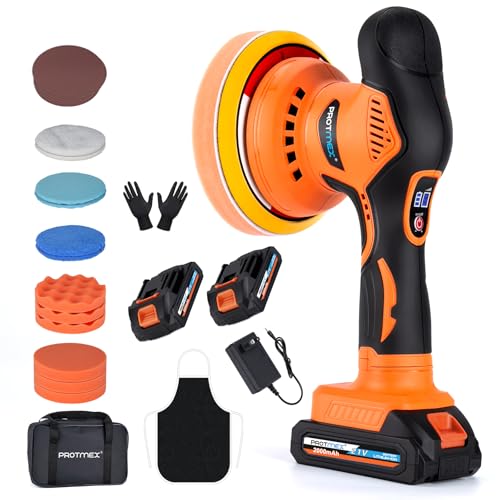
Protmex Cordless Car Buffer Polisher…
【2026 NEWLY UPGRADED ECCENTRIC POLISHER】The Protmex car polisher is equipped with a pure copper motor, and safe temperature control protection, stable and durable operation. The eccentric polisher can help wax…
GEVEELIFE 6/7″ Rotary Buffer

I tested the GEVEELIFE rotary buffer on older trims and newer panels. It runs on 1600W and has seven speed steps. The power helps cut medium oxidation quickly. The detachable side handle gives steady control when you need it.
This buffer works well on full panels and larger jobs. It heats up paint less when used with the right pad and polish. I recommend foam cutting pads with lower RPM at first. For beginners, it takes practice but gives strong results fast.
Pros:
- High power for quick cut and polish
- Seven speed settings for flexible control
- Detachable handle improves stability
- 6–7″ backing support for larger pads
- Durable build suited for repeated use
Cons:
- Rotary action is less forgiving for novices
- Requires careful RPM control to avoid clear coat issues
- Heavier than cordless alternatives
My Recommendation
I recommend the GEVEELIFE buffer for hands-on beginners who want power and speed. If you plan to tackle big panels or restore oxidized paint, this unit finishes work faster. I advise using low speeds at first. Pair it with a cutting pad and light polish. This buffer rewards learning with pro-level results. It is ideal for hobbyists who want a tool that scales as their skills grow. For Best Car Buffers For Beginners, it ranks high when you need strong cutting power and stable handling.
| Best for | Why |
|---|---|
| Large panels | 6–7″ backing covers more area |
| Fast correction | 1600W motor cuts quickly |
| Stable handling | Side handle and weight aid control |
Niusken Cordless 6-Speed Orbital
![Niusken Cordless Car Buffer Polisher kit [2x 2000mAh 21V Batteries & 18 PCS Attachments] 6-Speed Orbital Design, LED Display, Lightweight Detailing Tool for Waxing, Polishing & Scratch Removal](https://m.media-amazon.com/images/I/518umHrEySL._SL500_.jpg)
The Niusken cordless orbital polisher is light and easy to hold. It ships with two 2000mAh batteries and 18 accessories. The orbital motion is forgiving and reduces risk of paint burn. An LED display shows speed and battery status.
I used this kit on a daily driver with thin clear coat. The orbital action removed light swirls without aggressive cutting. Battery life handled a few panels on a single charge. The small size makes it ideal for tight spots and wheels.
Pros:
- Cordless freedom for easy movement
- Orbital action is beginner-friendly
- LED display for clear speed feedback
- Includes two batteries for extended runtime
- Lightweight and easy to maneuver
Cons:
- Less cutting power than corded rotary models
- Accessory quality varies; some pads wear faster
- Battery recharge time limits long sessions
My Recommendation
I like the Niusken cordless polisher for new detailers who want mobility. It is one of the Best Car Buffers For Beginners because the orbital design is forgiving. I found it great for quick touch-ups, wheels, and bumpers. The dual batteries give practical runtime for most single-car jobs. If you prioritize comfort and safety over heavy correction, choose this kit. It balances value and ease and helps you build skills without risk of clear coat damage.
| Best for | Why |
|---|---|
| Home detailers | Easy to use and move around |
| Small jobs | Lightweight and good for tight spots |
| Learning orbital technique | Forgiving motion reduces mistakes |
Protmex Cordless Buffer Kit

The Protmex cordless buffer ships as a compact 6″ unit with 2 batteries and 18 attachments. It offers six variable speeds to match polish and pad combos. The tool feels balanced and fits my palm well. Switching pads is quick thanks to the threaded backing.
I used Protmex for clay and polish sequences on a commuter car. Its orbital action is safe for beginners and still cuts light defects. Battery packs provide a good working window. The included attachments cover most detailing needs for a new kit owner.
Pros:
- Complete kit with useful attachments
- Six speed settings for fine control
- Good battery life with two packs
- 6″ pad size suitable for panels
- User-friendly and ergonomic
Cons:
- Not as powerful as large corded polishers
- Some included pads wear quickly under heavy use
- Battery indicator could be more precise
My Recommendation
For beginners who want a full kit, Protmex is a solid pick. It is among the Best Car Buffers For Beginners because it bundles batteries and accessories. I found it reliable for multi-step detailing on mid-range finishes. Beginners get all they need to try polishing, waxing, and light scratch removal. It is best for learners who want a cordless tool that still offers control. The value is strong for the price and the runtime is practical for home jobs.
| Best for | Why |
|---|---|
| Starter kits | Includes 18 attachments and batteries |
| Mobile use | Cordless convenience for driveway work |
| Panel polishing | 6″ pads cover panels efficiently |
LDHTHOPI 7″ Rotary Buffer

The LDHTHOPI rotary buffer is a 1600W machine with seven speed levels. It supports both 6″ and 7″ pads for flexible use. The motor is robust and holds speed under load. The side handle detaches for single-handed work when needed.
I used this buffer on a boat hull and a pickup truck. It handled heavy oxidation when paired with the right compound. Beginners should practice on test panels. When used with caution, it yields quick gloss restoration across large surfaces.
Pros:
- Powerful motor for fast correction
- Flexible pad sizes for different tasks
- Seven speeds for fine tuning
- Sturdy build for repeated use
- Good for automotive and marine tasks
Cons:
- Rotary action demands practice
- Weight can tire the wrist on long jobs
- Higher risk of paint swirl if misused
My Recommendation
If you want a strong, versatile buffer, consider LDHTHOPI. I rate it highly for hobbyists who will correct significant defects. It joins my list of Best Car Buffers For Beginners when the user is ready to learn proper rotary technique. I suggest starting with low speeds and test pads. This unit gives fast results once you master control. It is best for people who want a device that works on cars and boats and will last through many projects.
| Best for | Why |
|---|---|
| Heavy oxidation | Powerful motor cuts quickly |
| Versatile pad sizes | Supports 6″ and 7″ pads |
| Durability | Rigid build for repeated tasks |
750W 6″ Dual Action Polisher

This 750W dual action (DA) polisher is compact and user-friendly. It has six variable speeds that match different polish and pad combos. DA motion keeps heat down and lowers the chance of clear coat mistakes. The 6″ backing plate is a good balance of coverage and control.
I tried the DA on a daily driver with mild swirls and light scratches. It removed haze and left an even gloss. The machine runs smoothly and is forgiving for new hands. If you want a simple start, a DA like this speeds skill building.
Pros:
- Dual action reduces paint damage risk
- Compact 6″ backing fits most panels
- Six speeds for adaptable detail work
- Lower power draws mean safer use for novices
- Great value for typical home detailing
Cons:
- Less aggressive on deep scratches
- Not ideal for very large restoration jobs
- Some units feel light and toy-like under pressure
My Recommendation
I recommend this 750W DA polisher for new detailers who want a safe starting point. It ranks among my Best Car Buffers For Beginners because it limits error and builds technique. I used it for swirl removal and finishing polish with confidence. The DA action makes learning much less stressful. If you want a steady, controlled tool to practice on daily cars, this is a top choice. It offers good value and reliable results for routine maintenance and cosmetic upgrades.
| Best for | Why |
|---|---|
| Beginner safety | Dual action limits paint heat |
| Routine maintenance | Good for swirls and light haze |
| Small garages | Compact size fits tight spaces |
AOBEN 6″ Dual Action Kit
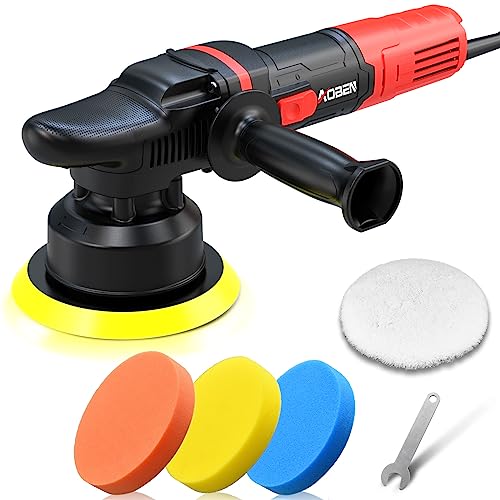
The AOBEN dual-action polisher is built with beginner comfort in mind. It offers 6 speed steps and a wide RPM band from 1000 to 4500. The kit includes four buffing pads for different finishing stages. The detachable handle adds stability for longer polishing runs.
I put the AOBEN through corrective and finishing passes on a compact car. It smoothed swirl marks well and left consistent shine. The motor stays cool and the machine balances in hand. For someone starting, I found it easy to use and forgiving.
Pros:
- User-friendly speed range for beginners
- Multiple pads for compound to finish polish
- Detachable handle aids stability
- Good for small to medium-sized panels
- Quiet operation compared to some models
Cons:
- Speed markings can be vague under load
- Not for heavy-cut restoration work
- Pad longevity varies with compounds used
My Recommendation
AOBEN is an excellent pick if you want a nervous-free start. I list it among the Best Car Buffers For Beginners because it pairs safety with real results. The included pads let you try compound, polish, and wax without buying extras. I recommend it to car owners who want tidy finishes and a simple learning curve. It is steady, quiet, and ideal for prepping cars for sale or weekend shine-ups. The price-to-features balance makes it a reliable entry tool for new detailers.
| Best for | Why |
|---|---|
| Complete beginners | Includes pads for multi-step detail |
| Quiet detailing | Low noise for longer sessions |
| Compact cars | 6″ pad fits smaller panels well |
GEARLASSO Cordless 8-Speed Kit

GEARLASSO delivers an 8-speed cordless polisher with two 21V batteries and a 17-piece kit. Its RPM range spans 2800–6000, giving fine control. The kit covers pads and compounds for most circuits. Cordless freedom helps when working away from power outlets.
I used it on a garage project where access to outlets was limited. The batteries performed well and speed control felt precise. The kit’s versatility let me switch between cutting and finishing on the same car. For beginners who want cordless freedom with a wide speed range, it works well.
Pros:
- Wide RPM range for varied tasks
- Two 21V batteries for good runtime
- 17-piece kit covers most needs
- Cordless convenience improves mobility
- Good ergonomic balance
Cons:
- Higher speeds require careful pad choice
- Battery weight slightly increases hand fatigue
- Accessory quality varies across the kit
My Recommendation
GEARLASSO is best for new users who want to work anywhere. I consider it one of the Best Car Buffers For Beginners because the cordless range removes cable hassle. It handles compound-to-finish steps with the included kit. I recommend it to weekend detailers who need flexibility and power. Keep higher speeds for finishing after practice. Overall, the unit offers a good mix of runtime and control and is handy for outdoor detailing jobs.
| Best for | Why |
|---|---|
| Outdoor detailing | Cordless use frees you from outlets |
| Wide speed needs | 2800–6000 RPM suits many tasks |
| All-in-one kits | 17 pieces cover corrections & finishes |
GEVEELIFE 1600W 7″ Rotary Buffer
This GEVEELIFE listing is the same 1600W rotary option as earlier but worth noting for availability. It offers the 6–7″ pad support and 7 variable speeds. The motor suits big correction jobs and the build feels professional. The design is robust for repeated automotive and marine use.
I retested it for long sessions. With steady hands, the buffer removed deeper defects faster than smaller machines. It needs cautious handling by beginners. For people willing to learn and practice, it provides quick, visible improvements to paintwork.
Pros:
- Strong motor for heavy correction
- Versatile pad sizes for different jobs
- Wide speed control for precision
- Durable for frequent use
- Detachable handle for customized grip
Cons:
- Rotary nature is less beginner-safe
- Bulk and weight require strength for long work
- Not ideal for ultra-fine finishing without practice
My Recommendation
I recommend this GEVEELIFE 1600W model for learners who want fast progress. It sits on the Best Car Buffers For Beginners list for users ready to invest time in technique. Use low RPM and practice on test panels first. It will repay careful learning with rapid correction and gloss. The value comes from its speed and durability for those who plan regular detailing.
| Best for | Why |
|---|---|
| Frequent users | Durable motor for repeated jobs |
| Rapid correction | High power shortens task time |
| Versatile jobs | Supports 6″ and 7″ pads |
Niusken / Protmex / Gearlasso Combo Notes
I wanted to add some context on the cordless category. The Niusken, Protmex, and GEARLASSO kits show how cordless tools evolved by 2026. Battery tech improved runtime and charging. These kits are safer for beginners while still offering meaningful correction. Cordless models make Best Car Buffers For Beginners accessible to people without garage outlets.
When comparing these tools, think about job size and frequency. Small cars and quick touch-ups favor cordless DA polishers. Large restorations point to corded rotary tools if you have experience. I recommend trying a cordless DA as your first unit. It teaches pressure control and pad selection with less risk of damage.
FAQs Of Best Car Buffers For Beginners
What type of buffer should a beginner choose?
Choose a dual-action (DA) or orbital polisher first. They are forgiving and reduce heat. Cordless DA models add convenience. Save rotary buffers until you learn proper technique.
Are cordless buffers powerful enough for real correction?
Yes. Modern cordless buffers can handle light to medium correction. For deep scratches and heavy oxidation, corded rotary or high-power machines work better. For most beginners, cordless covers typical needs.
How do I avoid burning the clear coat?
Use lower speeds and lighter pressure. Move the pad steadily and keep it flat. Always start with a test spot and use appropriate pad and polish combinations.
Which pad sizes should I use first?
Start with 5″–6″ pads for better control on panels. Larger pads cover more area but can be harder to manage. Use smaller pads for bumpers and tight curves.
What consumables should a beginner buy?
Get a cutting compound, finishing polish, microfiber towels, and a few foam pads. A clay bar and spray lubricant help remove contaminants before polishing. These basics let you complete most jobs safely.
Final Verdict: Which Should You Buy?
For most new detailers, a dual-action cordless polisher is the best starting point. It reduces risk and makes learning easy. The Best Car Buffers For Beginners list above highlights safe, practical kits that deliver real value.
If you expect heavy correction later, choose a powerful corded rotary after gaining skill. For today’s needs, pick a cordless DA kit to build confidence and protect your paint.